



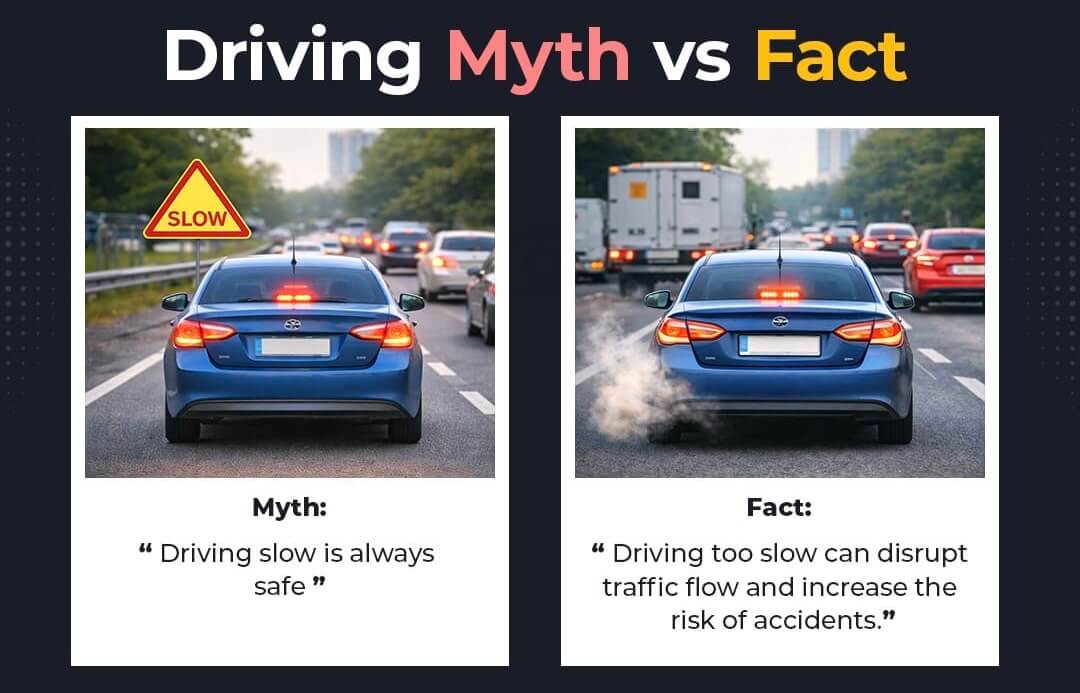
When it comes to road safety, most people believe one simple rule — the slower you drive, the safer you are. While it’s true that speeding increases risk, the idea that driving slow is always safe is a common myth that can actually create dangerous situations on the road.
Let’s break it down.
The Truth About Speed and Safety
Speed limits aren’t random numbers. They are carefully set based on road design, traffic flow, visibility, and typical driving conditions. Driving far below the posted speed limit can disrupt traffic flow and increase the risk of accidents.
Safety isn’t just about going slow — it’s about driving at a safe and appropriate speed for the conditions.
Why Driving Too Slow Can Be Dangerous
1. It Disrupts Traffic Flow
When one vehicle is moving significantly slower than surrounding traffic, other drivers may become impatient. This often leads to:
- Sudden lane changes
- Tailgating
- Risky overtaking
These reactions increase the likelihood of collisions.
2. It Causes Rear-End Collisions
Drivers expect traffic to move at a consistent speed. If you’re driving too slowly, especially on highways, vehicles behind you may not anticipate your speed difference in time.
3. It Creates Confusion
Consistency is key in safe driving. Predictable behavior reduces accidents. Driving much slower than others makes your actions less predictable.
Where Driving Too Slow Is Especially Risky
- Highways and freeways
- Merging lanes
- High-speed rural roads
On highways, maintaining a speed close to the flow of traffic is often safer than driving well below the limit.
When Slower Is Safer
Of course, there are situations where reducing speed is absolutely necessary:
- Snow or icy roads
- Heavy rain or fog
- Construction zones
- School zones
The key difference? You’re adjusting your speed to road conditions, not simply driving slow all the time.
The Real Safety Rule
The safest drivers:
- Follow posted speed limits
- Match the flow of traffic (within legal limits)
- Adjust speed based on weather and road conditions
- Maintain safe following distance
Safe driving isn’t about being the slowest car on the road — it’s about being the most aware and responsible driver.
Driving slow doesn’t automatically make you safe. In fact, in certain situations, it can increase risks. The real goal is balance — driving at a speed that is legal, appropriate, and consistent with traffic conditions.
Final Thoughts
Remember:
Drive smart. Drive aware. Drive safe.